
Negative Space Phone Photography: Frame Stronger Photos

Bob Wild
Fine Art Photographer, Vancouver Island
Founder of Who Said Photography | 20+ years shooting | I try and test every tip on real shoots before it goes on the page
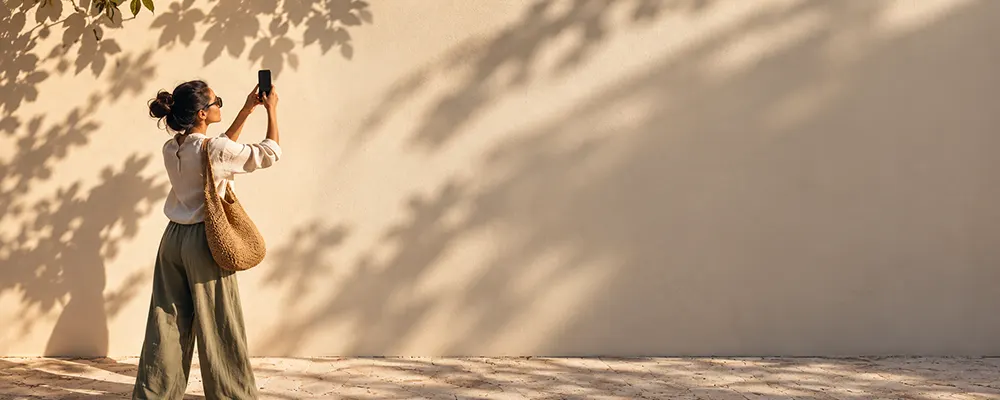
Negative space phone photography is something I use when my subject starts getting lost within a busy frame. Sun, mountains, people, signs, and bright objects can all compete for attention. Placing the main subject in a less busy area helps draw attention to what I actually want you to see.
You don’t need a special camera mode or editing app. Look for one clear subject, a simple area around it, and a reason for leaving that space in the frame. I’ll show you how I use negative space to create cleaner, stronger phone photos.
Key Takeaways
Choose one clear subject so the empty space supports it.
Scan the edge of the frame for small distractions.
Leave room ahead of movement or a person’s gaze.
Compare wide and tight versions before leaving a scene.
What is negative space in photos?
Negative space is the visually quiet area around your main subject. The subject becomes the positive space, while sky, water, pavement, shadow, fog, or a plain wall can provide separation. Learning to see positive and negative space together makes it easier to understand how each part contributes to the photographic composition.
When you give the subject some breathing room, it becomes much easier for your eye to find what the photo is really about. Negative space in photography does not have to be white or empty. It only needs to remain less important than the subject.
The use of negative space can establish a focal point, emphasize the subject, and give the eye somewhere obvious to land.
Why does space improve composition?
Space improves composition by directing attention, separating the subject, and shaping the mood of the photo. It can make a person look isolated, create a sense of calm, show the sense of scale in a landscape, or give a simple object more visual importance.
The apparent emptiness around a subject can also help tell a story. A lone walker in fog feels different from the same person tightly framed against a busy street.
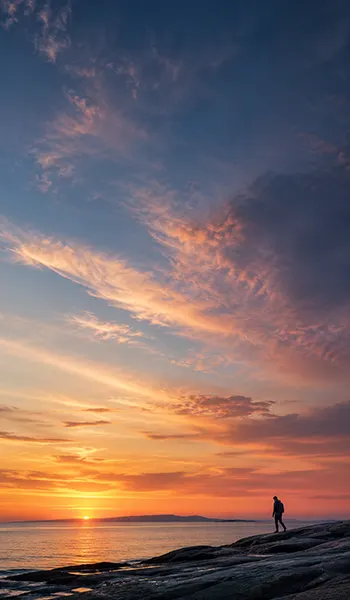
Space above a subject can suggest height, while space in front can suggest movement. A small subject surrounded by sky or water can make the scene feel more expansive.
A good rule of thumb is to ask, “What is the space doing?” If it adds calm, direction, balance, isolation, or scale, it is probably helping the composition.

How do you find useful negative space?
As a photographer, I find useful negative space by studying the background. Moving sideways, crouching, or changing height can remove distractions faster than changing a camera setting.
Changing your position first can simplify a scene before you need to crop, blur, or edit the photo.
Try these reliable sources of space:
- Aim upward to place a person, bird, or branch against the sky.
- Use a plain wall behind a portrait, flower, bicycle, or small object.
- Look down for pavement, sand, snow, grass, or still water.
- Use fog, shade, or a dark doorway to simplify detail.
- Step back to place a small subject inside a larger landscape.
A foreground of grass, snow, shadow, or water can create negative space. In street photography, open pavement, a blank wall, or a patch of light can separate a person from clutter.
Watch the corners before pressing the shutter. In minimalist photography, even a small bright object near the edge of the frame can become distracting.
Place the subject with clear intent
A centred subject often feels stable, while an off-centre placement gives the surrounding space a stronger role.
The rule of thirds can help with placement, but treat it as a guide. Use the phone’s grid to judge balance until the space around the subject feels intentional.
When a person or animal looks sideways, leave room in front of the face. Do the same for moving subjects. Empty space around the subject can make the composition feel more harmonious, while too little room feels crowded.
|
Scene |
Useful space |
Subject placement |
Likely effect |
|---|---|---|---|
|
Portrait |
Plain wall or open sky |
Off-centre with room toward the gaze |
Calm and attentive |
|
Moving subject |
Road, water, or field |
Space ahead of the movement |
Direction and anticipation |
|
Landscape |
Sky, snow, fog, or water |
Small subject near a third |
Scale and isolation |
|
Still life |
Table, floor, or shadow |
Simple offset arrangement |
Order and clarity |
Use simple phone controls carefully.
Negative space phone photography depends more on compositional framing than your equipment.
An ultra-wide lens can include lots of negative space, but it may also add clutter and stretch shapes near the edges. If the subject becomes too small, move closer.
Depth of field can help when background detail cannot be removed by repositioning. Blur or bokeh can simplify it but should not replace good framing.
Avoid common negative space mistakes.
The biggest mistake is leaving space without purpose. A large blank area does not automatically make a stronger picture. Negative space can help only when it supports the subject or your message.
Watch for these common problems:
-
The subject becomes too small.
-
Bright colour, texture, or sharp lines compete for attention.
-
The subject faces the edge while unused space sits behind it.
-
A tilted horizon cuts awkwardly through a simple area.
-
Heavy cropping removes useful breathing room.
Do not confuse negative space with background blur. A sharp wall or open sky works when it stays simple. Minimalism means reducing unnecessary competition, not making every background soft.
An example of negative space that works well is a small person beneath a broad sky. The space helps create a sense of scale or mood. The same idea becomes weaker if poles, branches, or signs surround the subject.
Test each composition before leaving.
Use a two-frame test. Make one spacious version, then move closer or select a different lenses for a tighter frame. Keep your focus and exposure consistent.
Review both negative space images. Does the space add meaning? Does your eye find the subject quickly? Are there distractions near the edges of your photo? Comparing the two can create an intriguing way to judge whether the extra space improves the photograph.
Cropping can refine negative space in your photography after the shot, but keep it light. Straighten the horizon or remove a distracting edge while preserving enough space around the subject for the frame to feel intentional.
Keep Learning
Your next move with the camera
You’ve got the controls. These are the guides I’d hand you next. Each one picks up where the other left off. Written from the same real photo shoots
-
How to Take Better iPhone Photos With Simple Fixes
How to Take Better iPhone Photos With Simple Fixes Most phone photos don’t fail because the camera is…
-
How to Take Better Photos With Your Phone
How to Take Better Photos With Your Phone How to take better photos with your phone starts with…
-
How to Use Android Camera Controls for Better Photos
How to Use Android Camera Controls for Better Photos I’ve found that most beginners don’t need more camera…




RECOMMENDED EDITOR
On1 Photo RAW – For when you outgrow the build in phone editor
The mobile editor I reach for my serious shots. Free 30-day trial
Conclusion: Make space to serve the subject.
Negative space works best when every part of the frame has a purpose. Choose one subject, simplify the area around it, and decide what the surrounding space should communicate.
With practice, you’ll recognize when negative space photography strengthens an image rather than simply leaving unused room. This is useful in minimalist photography, portrait photography, street photography, and landscapes.
The goal is not to fill every frame with empty space. It is to use negative space to create a cleaner relationship between the subject and everything that surrounds it.
About Bob Wild
Bob is a fine-art photographer on Vancouver Island and the creator of Phone Photo Guide, and the founder of Who Said Photography. He shares practical mobile photography tips based on real shooting situations, including portraits, natural light, composition, and everyday phone editing.